UNDERSTANDING IDM - A retrospective on the history of the braindance movement and 10 essential records you should listen to

by Enrico Elio Scollante


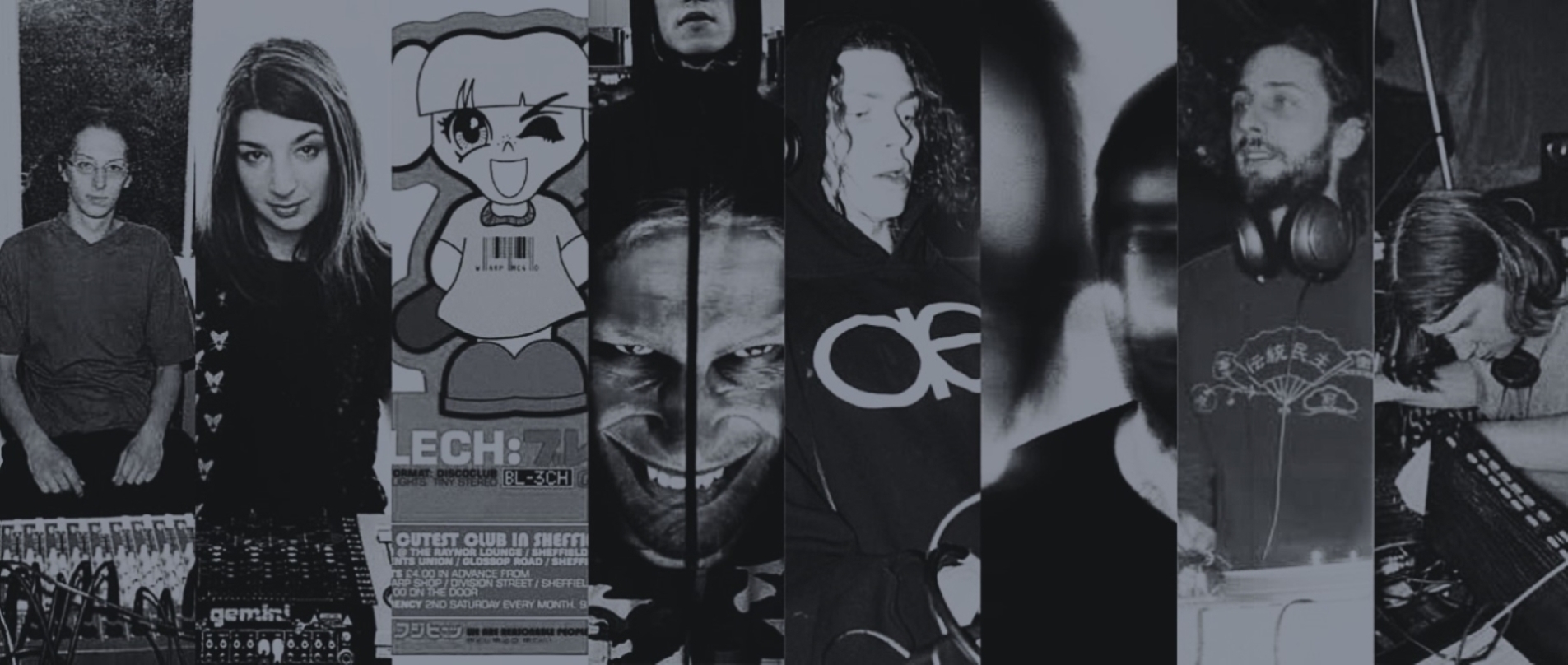
IDM (short name for 'Intelligent Dance Music') is the most common term used to describe what has been one of the biggest electronic music movements of the 1990s.


Having started out as an offshoot of the late 80s British rave scene, 'Braindance' music, as its pioneers wanted to call it, certainly wasn't seeking the ravers' appeal, but rather wanted to demonstrate how powerful electronic music could really be.


And although Braindance was still very much linked sonically to the techno and house music from the US, the desire to experiment was present from the very beginning: just have a look at the first legendary single by LFO, the spiritual fathers of IDM, released in 1990, or the first few singles and EPs by a young Richard David James (known to most as Aphex Twin), who is also the founder of the most influential label for the Braindance scene, Rephlex Records.


We can say Braindance was a first form of IDM, i wouldn't say they are the same thing.
Braindance was more of an evolution of the sounds of acid house and
Detroit techno, it didn't really stand out as a "unique" genre.
It rather introduced to a concept that would quickly evolve into a much bigger thing which is IDM, that concept being pushing the sound of
electronic music to the limit. And there is an exact moment in time
in which this evolution can be identified: 1992.


1992 is the year of Warp Records' "Artificial Intelligence" compilation, the
first act of a series of records that served as the 'Intelligent Dance Music'
manifesto. 1992 is the year of Aphex Twin's "Selected Ambient Works 85-92",
arguably one of the most influential electronic records of all time.
From the city of London, which was the artistic core of Braindance
until now, IDM starts to expand all over the UK, reaching artists from
Sheffield, like The Black Dog, and a label from Manchester, Skam Records,
which had in its roster a duo that would later be part of the IDM takeover:
Autechre.


Warp Records though remains the label that would champion all of the
stylistic evolution IDM had during its peak, positioning itself as the landmark
for the scene by bringing all of the principal acts to its centre and create
what it's best describable as a community rather than a genre or a scene.
Warp has been the long time home of Aphex Twin, of Autechre, The Black
Dog and Plaid, Seefeel, Squarepusher, to name a few, and would later bring
attention to the talent of electronic musicians from all over the UK, from Boards Of Canada to Mira Calix.


IDM artists had then the capacity to constantly evolve by incorporating in their art little parts and elements of anything that would revolve around it:
when Trip Hop started to become a big thing, Aphex Twin released 'Alberto Balsalm', The Black Dog released 'Raxmus' and Boards Of Canada were starting out by releasing their first EP, 'Twoism'.
But it was with the takeover of Jungle and Drum n Bass onto the electronic scene that you'd witness IDM's most important shift in its sound: Luke Vibert would release a bunch of records with moniker 'Plug' in '95/'96, in which he would cut up drum breaks in ways no one ever did before. Vibert then introduced Aphex Twin to the technique, which led to the release of the 'Hangable Auto Bulb' EPs in 1995, the 'Richard D. James Album' in 1996, the 'Come To Daddy' EP in 1997 and ultimately 'Drukqs' in 2001, all important releases that marked a big piece of territory in the history of music just for how influential they've been.
From there on Squarepusher would debut its first record in '96, "Feed Me Weird Things", and Mike Paradinas would become one of the most beloved artists of the scene by releasing "Lunatic Harness" in '97 as μ-Ziq. And so, Drill 'n Bass becomes the first proper subgenre of IDM that would quickly sneak out of the UK, arriving to the United States where artists like Bogdan Raczynski, Kid606 and Venetian Snares evolved it into what's now best known as Breakcore.


It's the "flexible" nature of IDM music that made it a great influence to any form of music that wasn't even remotely connected to what Braindance and IDM were about, from rock bands like Radiohead and Nine Inch Nails, to pop singers like Björk and even hip-hop producers such as Kanye West and Travis Scott, all the way to the hyperpop scene of the 2010s.

The real spirit of IDM though continues to survive in the underground communities, forums, discord channels and independent labels such as Analogical Force, to name one, that spread the message.


And so here are 10 essential records you should listen to if you want to approach the sound of Braindance and IDM for the first time, spanning all decades through the '90s to the 2020s:
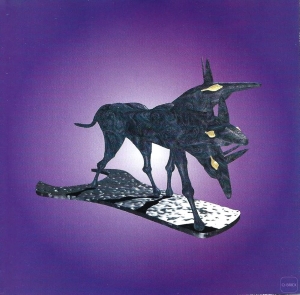
The Black Dog / "Spanners"

1995, Warp Records

LISTEN/BUY:

https://warprecords.bandcamp.com/album/spanners


Since 1989, The Black Dog are still recognized as a key act in electronic music's ecosystem.

Historically led by Ken Downie, 1995's "Spanners" is a six-hands effort, as it was made by The Black Dog's first incarnation, composed by Downie and Ed Handley and Andy Turner, two founding members of the project, which will later make their way in the IDM scene as Plaid.

"Spanners" itself is basically IDM in its purest form and sound: all of the genre's key elements and influences are present in this record: the squelchy acid synths, the ambient soundscapes, and the Mills-inspired four-to-the-floor kick beats find their way together through lush and complex arrangements and progressive structures. The perfect start for anyone who wants to explore IDM's characteristic complex sounds.

MY ESSENTIAL TRACKS: "Barbola Work", "Psil-cosyin", "Chase The Manhattan", "Tahr", "Nommo", "Chesh".

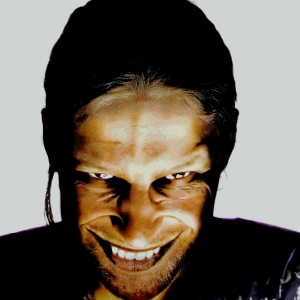
Aphex Twin / "Richard D. James Album"

1996, Warp Records

LISTEN/BUY:

https://aphextwin.bandcamp.com/album/richard-d-james-album


I think i don't really have to explain who Aphex Twin is. His influence on modern music is undeniable: he has been cited many times by many artists such as Björk, Trent Reznor, Thom Yorke, even Travis Scott and Kanye West.

I could've chose among a lot of important albums RDJ released not only as Aphex Twin, because they all represent an important part of the IDM sound in their own unique ways, but i ended up choosing what probably is considered his most important album of all, the "Richard D. James Album".

It's the first of his records that was made exclusively with computer software, and it paved the way for lots of other IDM staple artists to introduce external elements from the Drum 'n' Bass and Jungle scene that was exploding amongst ravers, even without it being the first IDM album to play with such sounds. What makes RDJ a different beast in the IDM universe though is the unique approach to production he has and the elements he uses in his music, which all find their place in this album, from the goofy squelchy synths to the orchestras and the organic sounds and field recording samples. Songs like "4", "Fingerbib", "Girl/Boy Song" are still an influence in today's music, "Peek 82454201", "To Cure A Weakling Child" and "Yellow Calx" bring the concept of 'sound design' to a whole new level. Not to mention the iconic cover artwork. This record really needs to be listened to at least once before dying.

MY ESSENTIAL TRACKS: "4", "Peek 82454201", "Fingerbib", "To Cure A Weakling Child", "Yellow Calx", "Girl/Boy Song".

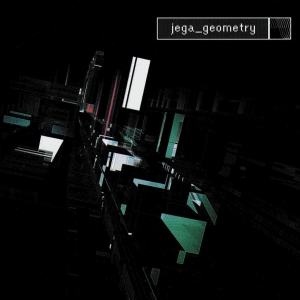
Jega / "Geometry"

2000, Planet Mu

LISTEN/BUY:

https://jega.bandcamp.com/album/geometry


Jega's name gets overshadowed way too often by the names of his contemporaries, but not for Thom Yorke who cited "Geometry" as an important inspiration for him during the Kid A and Amnesiac sessions.

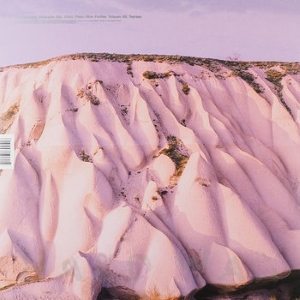
Dylan Nathan, the man behind this project, was actually a known figure in UK's 90s IDM scene, in which he was directly introduced by his friend Mike Paradinas, who at the time studied architecture with him on the same campus as Aphex Twin. Nathan's first musical experiments ultimately found their place in Paradinas' Planet Mu label through a first album, "Spectrum", which essentially is a big mix of sample-based Jungle-style music and hardcore techno. "Geometry" came two years later, and Jega left most of the brutal hardcore elements of the previous record behind in favour of dreamy ambient atmospheres and experiments with FM synthesis.

MY ESSENTIAL TRACKS: "Alternating Bit", "Geometry", "Rigid Body Dynamics", "Inertia", "Subdivision Surfaces".

Autechre / "Amber"

1994, Warp Records

LISTEN/BUY:

https://autechre.bandcamp.com/album/amber


When you say IDM, i say Autechre.

As a duo, Sean Booth and Rob Brown incarnate the spirit of the Braindance movement more than anyone else: the act's most recognizable point is indeed the constant exploration of sound design techniques and glitchy complex song structures, which at times feel more like incredibly studied and detailed architectural buildings disguised as total chaos. These characteristics have been an important inspiration for PC Music's first electronic pop revolution in the early 2010s. A.G. Cook himself cited them as such, Charli xcx and SOPHIE did so too.

The Autechre project started off in 1987, but found its audience in 1992 after participating in Warp Records' "Artificial Intelligence" compilation. "Amber" is their second major effort, and a big step up for the duo's sound. What makes this record a game-changer in electronic music as a whole are the lush melodies colliding with the cold synth sounds, creating a peculiar mystical atmosphere and a cinematic-like epicness through most of the tracklist. A mention also needs to go to the beautiful glitchy percussion sounds, which'll be a trademark of Autechre's productions particularly from this album onwards.

"Amber" is also the first true moment in which Braindance distances itself from its evident techno influences and embraces much slower tempos and sound design exploration, putting down the cards for what IDM became shortly after.

MY ESSENTIAL TRACKS: "Foil", "Montreal", "Silverside", "Slip", "Glitch", "Further", "Yulquen", "Teartear".

Bogdan Raczynski / "Boku Mo Wakaran"

1999, Rephlex Records

LISTEN/BUY:

https://bogdanraczynski.bandcamp.com/album/boku-mo-wakaran


Bogdan Raczynski's artistic figure emerged in the mid 90s during a very specific moment in electronic music's intercourse: after the release of the previously mentioned "Richard D. James Album" by Aphex Twin and Squarepusher's jazzy debut "Feed Me Weird Things" in 1996, the IDM scene suddendly shifted gears from the colder ambient-oriented sound experiments to the scrambled glitchy jungle beats that would later define a whole new branch of IDM, mostly in the US.

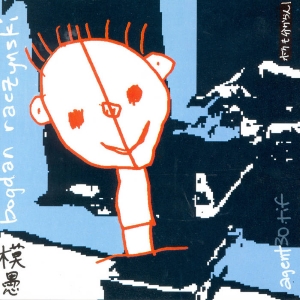
Bogdan's first musical ventures played a big role in the exportation of IDM music in North America; he got signed to Aphex Twin's Rephlex Records in 1999 after sending a demo of "Boku Mo Wakaran" to the label while still an homeless in Japan. The album itself, starting from the title, kind of reflects on that japanese experience through heavily chopped up breaks, processed vocal samples and field recordings all put together in 27 chaotic Drill 'n' bass tracks, all lacking an actual sense of melody except for a few 'calmer' moments.

More than anyone ever did before, Bogdan Raczynski brought up with just this record a new way of working with samples and breaks, extensively using tracker softwares, and building the foundation of the internet-acclaimed Breakcore subgenre, built around the crazy break-chopping techniques Raczynski experimented with a few years before.

MY ESSENTIAL TRACKS: "Untitled 2", "Untitled 4", "Untitled 6", "Untitled 9", "Untitled 14", "Untitled 18", "Untitled 25"

mu-Ziq / "In Pine Effect"

1995, Virgin Records

LISTEN/BUY:

https://open.spotify.com/intl-it/album/2NbnGjA6Gt1TNctBt286IP


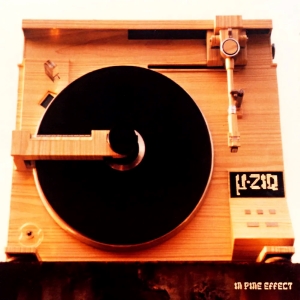
Mike Paradinas' μ-Ziq project has been and still is one of the main landmarks for any IDM producer that came after. Since 1993's Rephlex release "Tango n' Vectif" Paradinas used this project as a lab for his own experiments in the field of Braindance music, peaking with 1995's "In Pine Effect" and starting a cycle that would then find its conclusion in 2003's "Bilious Paths". "In Pine Effect" though remains the most bizarre and unique one out of all.

The first thing that sounds bizarre about this record is the fact that it was released by a major label, Virgin Records: the name came to the attention of the label and was chose for remixing some songs for a britpop band, The Auteurs. The EP that followed wasn't a success, but Virgin weirdly decided to keep Paradinas in its roster and release "In Pine Effect" for him under a personal sub-label given to him by Virgin, which would later become Planet Mu. The album is a weird lo-fi mixture of menacing hardcore breakbeat and ambient elements and clean lush synths. The attention goes in particular to the vast use of acoustic instruments and samples, mostly for the percussive elements which also reach extreme levels of saturation. In contrast to such distorsion are sweet and goofy synth melodies and major chords that fuck up the songs' atmospheres completely every time, without resulting out of place.

With the next two albums, "Lunatic Harness" and "Royal Astronomy", the constant evolution of Paradinas' sound would favour the breakbeat inspirations in order to the newborn Drill 'n' Bass subgenre that Mike himself contributed to create with these records and leaving the 'goofiness' behind almost completely from "Bilious Paths" onwards, marking "In Pine Effect" as a unique step in his discography as μ-Ziq.

MY ESSENTIAL TRACKS: "Roy Castle", "Funky Pipecleaner", "Iced Jem", "Phiesope", "Mr Angry", "Melancho".

Vreschen / "Front"

2025, Braindance News

LISTEN/BUY:

https://braindancenews.bandcamp.com/album/front


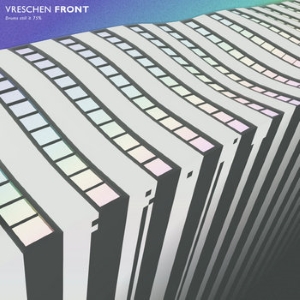
I admit to a slight conflict of interests regarding the inclusion of this album in this article, due to my personal closeness to the community behind the Braindance News label, but i really think that "Front" fully represents the state of IDM and Braindance in this last decade.

As Drill 'n' Bass progressively merged into Breakcore, the IDM community split in two: one half invested in the growth of Breakcore as a proper movement, the other tried to keep the spirit of Braindance alive, and did so by going back to the movement's techno-oriented roots and retrace the path of the genre's biggest phenomenons. The internet helped the revival by giving the chance to recreate the communities through forums and servers, from which various net-labels and online zines emerged, Braindance News being one of them. Vreschen's "Front" came out last year, and sounds exactly the way an IDM record should sound like in the 2020s. It's not very distant from Autechre's "Amber" or from Jega's "Geometry", but it's way fresher. UK Garage and deep house elements may find their way in some of the record's most accessible points, but the record in its entirety really feels like a renovation and natural evolution of sounds explored in most of the classic IDM records of the 90s, that hopefully will open up different doors for new producers interested in discovering the experimental sound and philosophy of Braindance.

MY ESSENTIAL TRACKS: "Forge", "Shake'n Bake", "Do It Datra Style", "Drive", "The Heart", "Floating Wheel"

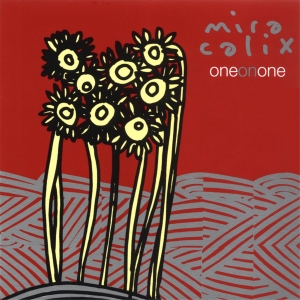
Mira Calix / "One On One"

2000, Warp Records

LISTEN/BUY:

https://miracalix.bandcamp.com/album/one-on-one


Mira Calix emerged on the scene on a second moment, as she started releasing tracks on Warp Records during the second half of the 90s. Her production approach seemed almost out of place for that period, focused more on the composition than the sound, in a 'classical' kind of way. It's no coincidence that she would later become an actual classical composer. Nonetheless, her early works possess a distinct balance between sound exploration and compositive experiments, with "One On One" being the perfect example of such balance: the tracks on this record play a lot around the concept of minimalism, moving through repetitive and essential percussion and simple soft melodies, with the bare use of any harmonic element.

Later on, Calix ended up focusing mainly on classical composition, eventually returning to experimental electronic on her 2021 record "absent origin" before sadly passing away in 2022.

MY ESSENTIAL TRACKS: "Skin With Me", "Sparrow", "Schmyk", "Routine (The Dancing Bear)", "Isabella", "Upiyano"

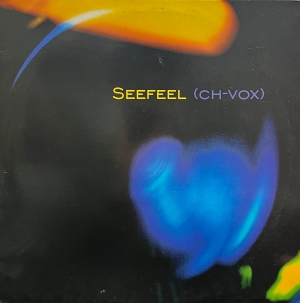
Seefeel / "(Ch-Vox)"

1996, Rephlex Records

LISTEN/BUY:

https://seefeel.bandcamp.com/album/ch-vox-redux


Seefeel are a weird affair. The act saw the light in 1992 as two friends, guitarist Mark Clifford and drummer Justin Fletcher, united forces with vocalist Sarah Peacock and bassist Darren Seymour to form an alternative rock band. After releasing the shoegaze oriented EP "More Like Space" and a rock-meets-dub-meets-techno debut record called "Quique" on Too Pure in 1993, a remix of one of the tracks on the EP, "Time To Find Me", made by none other than Aphex Twin, changed the intercourse of the band which sound had turned completely electronic by their second album. By 1996, Clifford's Disjecta solo project became a main occupation for him, and Seefeel as a band would go on a long hiatus right after releasing this record, "(Ch-Vox)".

Seefeel's sound in "(Ch-Vox)" ultimately sublimates in a steady, ominous ambient sound, which rarely presents rhythmic elements. There's a stunning element of contrast that i always stumble upon: the album's sound is cold, minimal, even dull sometimes, but i do still feel a strange warmth every time i listen to it. The wall of reverbs that builds up track by track as the record goes on really feels like a warm hug.

MY ESSENTIAL TRACKS: "Utreat (Complete)", "Hive", "Net", "Evio" (only on Redux edition), "Avatar" (only on Redux edition).

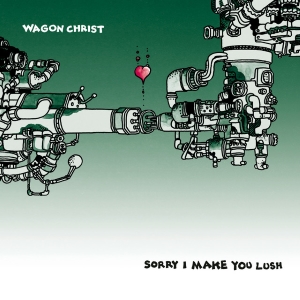
Wagon Christ (Luke Vibert) / "Sorry I Make You Lush"

2004, Ninja Tune

LISTEN/BUY:

https://open.spotify.com/intl-it/album/2fxOZi4VkImgPWuf6my6nR


Luke Vibert is arguably one of the most important figures in the Braindance spectrum. He pioneered the Drill 'n' Bass sound in 1995 by releasing a few EPs as Plug, and created an instantly recognizable sound with his Wagon Christ moniker.

"Sorry I Make You Lush" instantly gives off a joyous vibe. The unique sound of this record is mainly built around fusion and P-funk synth sounds paired with downtempo beats and a fun selection of samples, from vocal lines to whistles and bizzarre sound effects. It's different than the usual IDM sound you can think of, enough for a purist to dismiss this as an IDM record, though what builds a great Braindance is not always how it sounds, but it's the creative spirit of the mind that made it.

MY ESSENTIAL TRACKS: "Saddic Gladdic", "The Funnies", "Shadows", "Sci-Fi Staircase", "Sorry I Make You Lush", "Nighty Night".